A petrol chainsaw is the single most regulated machine in the garden machinery range, and it is also the one where a specification gap turns into a recall rather than a refund. Importers routinely assume that CE, ANSI and national approvals are interchangeable. They are not. This guide explains what each standard actually tests, which hardware each one implies, and how to read the paperwork before you commit to a container of chain saws.
The two families of requirement
| EU / CE (EN ISO 11681-1) | US / ANSI B175.1 + EPA | |
|---|---|---|
| Nature | Mandatory conformity for placing on the EU market | Voluntary consensus standard, but OSHA and insurers effectively require it |
| Focus | Machine safety, noise, vibration | Machine safety + emissions for handheld engines |
| Noise | Declared guaranteed sound power level required | Less central; some states and municipalities restrict hours |
| Emissions | Stage V for certain engines | EPA Phase 2 / Phase 3 depending on class |
| Documentation | Declaration of Conformity + technical file | Test report + EPA certificate number |
Four hardware items every compliant saw needs
Whichever region you sell into, these safety features are the ones inspectors and insurers look at first. The difference between markets is usually in the performance threshold, not in the presence of the feature.
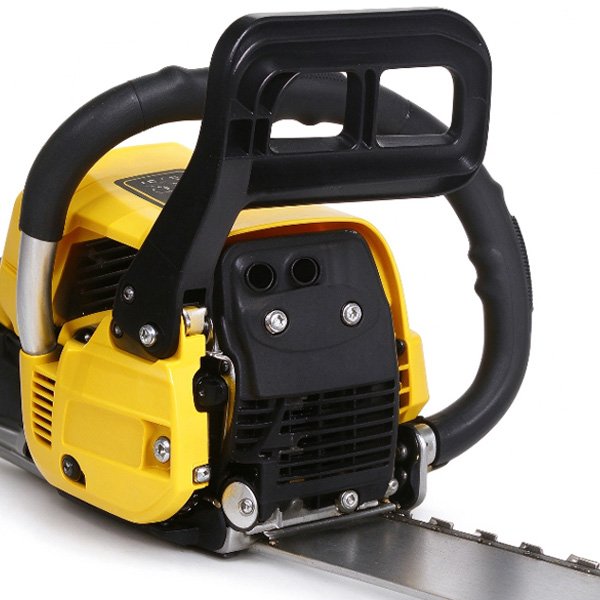
- Chain brake with both manual and inertia activation. Manual = the front hand guard; inertia = the brake that engages by itself during kickback. Cheap designs include the lever but skip the inertia mechanism.
- Kickback angle performance. The test measures how quickly the brake stops the chain after a simulated kickback event. Ask for the measured value, not a yes/no.
- Throttle trigger interlock. The throttle cannot be squeezed until the palm presses the interlock. Prevents unintended acceleration when repositioning hands.
- Chain catcher and hand guard geometry. Simple parts, but they are what separates a thrown chain incident from a broken-leg incident.
Why the safety spec drives your spare parts plan
Safety parts are exactly the parts you must hold inventory for. A chain brake band, a hand guard or an interlock that arrives six weeks later is a machine down for six weeks, and in most markets the customer is legally obliged to keep the saw out of service until it is fixed. We wrote about the inventory maths in spare parts and after-sales: what decides repeat orders.
How to read the paperwork (without being an engineer)
You do not need to understand every test method. You need three consistency checks:
- The model designation on the test report must match the model you are importing, including engine displacement variant.
- The engine family listed must match the engine fitted. If the supplier quietly changed engine supply between shipments, the certificate stops covering the machine.
- The Declaration of Conformity must reference the current version of the standard. Old versions remain in circulation for years after a standard is revised.
There is more detail on the emissions side in our guide to CE, EPA and Euro V compliance for export garden machinery.
Quick FAQ
Can one machine satisfy both markets? Usually yes for the hardware; the difference is in the noise and emissions certificates. Build one specification that meets the stricter requirement and sell into both.
Who is liable, manufacturer or importer? In the EU, the importer takes on significant legal responsibility for conformity. Practically this means you own the risk, regardless of who built the machine.
Do electric saws face the same requirements? Machine safety testing is similar, but the emissions and much of the noise testing disappear. See how electrification changes the buying decision.
Building your saw line
Most distributors find their saw range sells best when it follows bar length rather than engine size — 16, 18 and 20 inch cover most markets. That logic is set out in choosing a petrol chainsaw range for your market. When you are ready to compare models side by side, the chain saw category lists the export configurations currently in production, or send your target specification through the contact page.