A chainsaw range is one of the hardest things to get right in garden machinery. Order too narrow and you leave money on the shelf; order too broad and half the SKUs sit in the warehouse while the season passes. This guide covers the four decisions that actually determine whether a chainsaw line sells: bar length, displacement class, emissions compliance and safety specification.
Start with the tree, not the engine
Buyers often start from engine size because it is the number printed largest on the carton. In practice, customers buy by the job: cutting firewood, clearing storm damage, pruning orchard trees, felling small trees. Bar length is the specification they understand, and it should drive the range.
- 14 to 16 inch — pruning, limbing, small firewood. Home and garden users, and the entry price point.
- 18 to 20 inch — the volume seller in most markets. Firewood, fence posts, light felling.
- 22 inch and above — farm, estate and professional felling. Lower volume, higher margin.
A range built around 16, 18 and 20 inch bars covers the majority of demand in Europe, North America and Australia. Add a 22 inch model only if your customers include farms, estates or contractors.
Match displacement to the bar
An underpowered engine on a long bar is the most common specification mistake in this category. The saw starts, then bogs down in hardwood, and the customer concludes the brand is weak. As a rule of thumb:
| Bar length | Displacement | Typical user |
|---|---|---|
| 14–16 in | 38–45 cc | Home, garden, light pruning |
| 18–20 in | 50–58 cc | Firewood, farm, general contracting |
| 22 in and above | 60 cc+ | Professional felling, large timber |
Keep displacement consistent across the range so your sales staff can explain the difference in one sentence: longer bar, bigger engine, heavier work.
Emissions compliance is a gate, not a feature
Euro V, EPA Phase 3 and local two-stroke rules decide whether a container can be sold at all. Two practical points for importers:
- Confirm the engine family and paperwork before the order is placed, not when the container is on the water.
- Keep the certification documents with the shipment. Customs and dealers both ask for them.
Markets with strict small-engine rules increasingly require electric or battery alternatives alongside petrol. If your market is one of them, plan the range with both drive types from the start.
Safety specification sells
A chain brake, front hand guard, two-stage throttle lock and anti-vibration handles are mandatory in most markets, but they are also sales arguments. Dealers who can demonstrate the brake board closing in a fraction of a second sell more saws than dealers who only quote power figures.
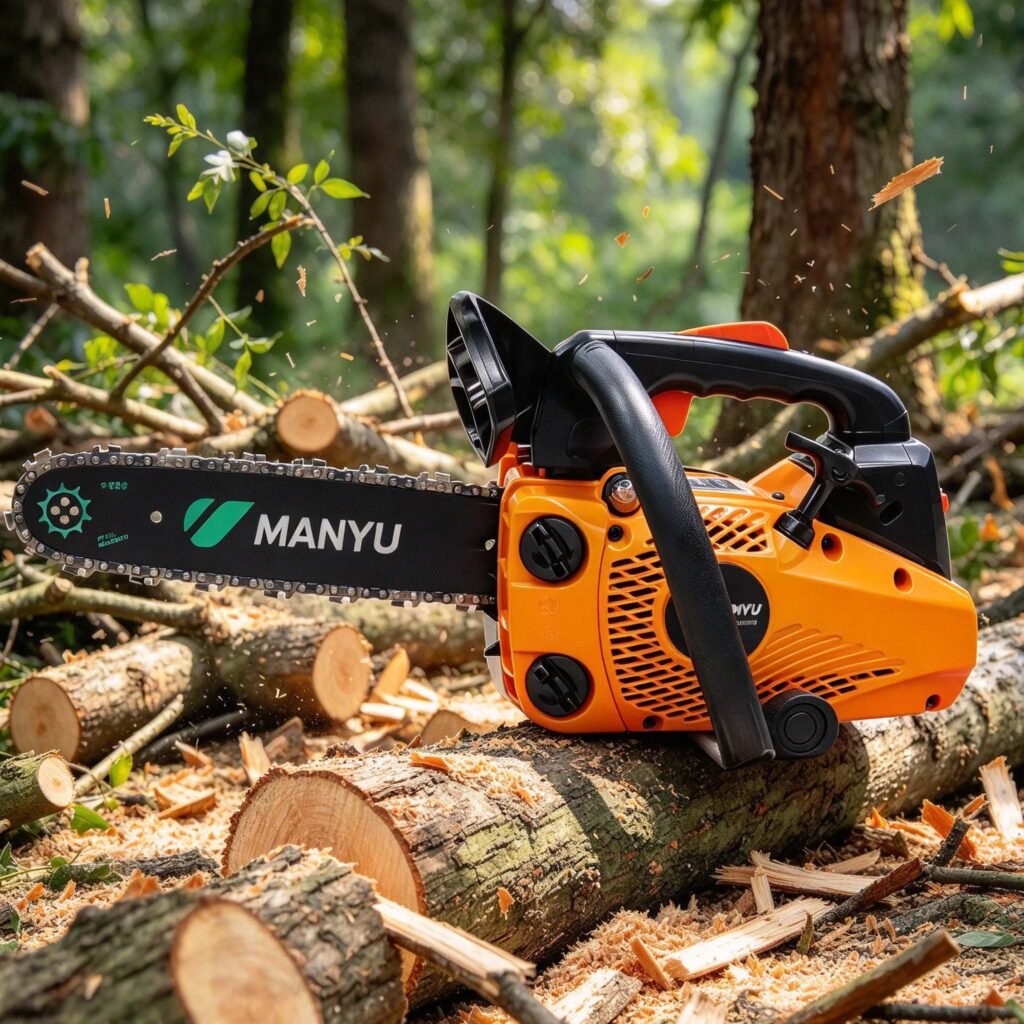
Our chainsaw range ships with a self-returning brake board, front hand guard and double safety throttle as standard, with bar and chain matched so the saw cuts straight for longer.
Frequently asked questions
Should I stock electric saws as well as petrol?
In suburban markets, yes. Battery saws now cover most domestic pruning and small firewood work, and they are easier to sell to buyers who do not want to mix two-stroke fuel.
How many saws fit in a container?
It depends on bar length and carton size. Ask for a loading plan with the quotation rather than a generic figure.
What spares should ship with the first order?
Chains, bars, spark plugs, filters and starter ropes. A five to ten percent spares ratio on the first order prevents the worst kind of after-sales complaint: a machine that cannot be serviced.
If you are planning a chainsaw range for the coming season, send us the bar lengths and quantities you have in mind — we will come back with the datasheet, MOQ, lead time and FOB Ningbo price within 24 hours.