
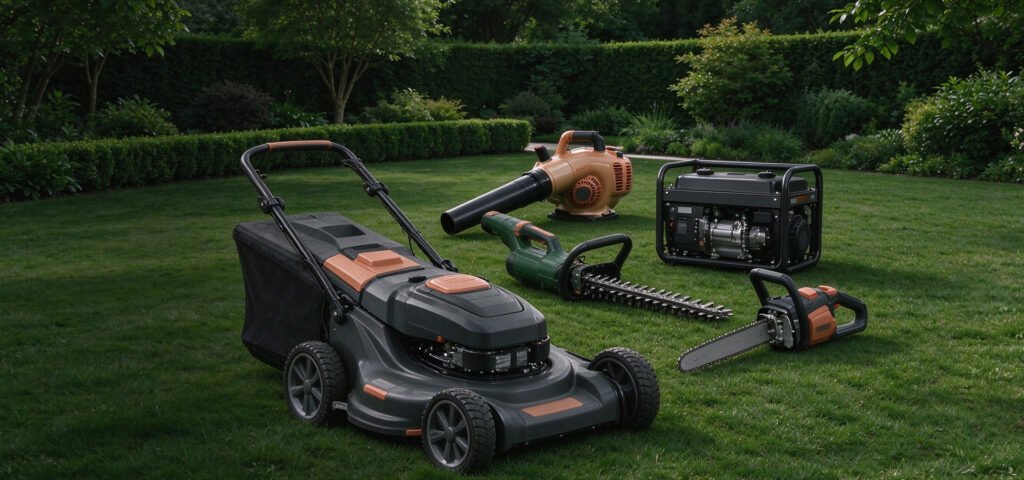
Import duty is decided by a six-digit code, and getting that code wrong is expensive in both directions: too high and you overpay on every shipment, too low and you face a reassessment that can reach back across previous entries. This guide covers how garden machinery is typically classified, why HS codes differ between lawn mowers, chain saws, trimmers and leaf blowers, and what to prepare before your first entry.
Why classification matters more than freight
Freight is visible and negotiated; duty is applied and rarely questioned until an audit. Two practical consequences:
- Duty compounds with landed cost. A three percentage point duty difference across several containers a year is real margin.
- Retrospective liability. Customs authorities in most regions can reassess past entries. A classification error discovered in year three can apply to years one to three.
Typical classification logic
| Machine | Deciding factor | Common classification driver |
|---|---|---|
| Lawn mower | Power source and cut type | Self-contained motor vs hand-pushed; powered blade vs unpowered reel |
| Chain saw | Self-contained motor | Handheld, own motor — usually distinct from stationary sawing machines |
| Brush cutter / trimmer | Handheld vs wheeled | Wheeled brush cutters can fall outside the handheld heading entirely |
| Leaf blower | Operation principle | Handheld vs backpack vs wheeled/pushed units |
Note the recurring pattern: it is usually the configuration — self-contained motor, handheld, whether an operator carries it — rather than the engine size that decides the heading. That is why two visually similar brush cutters can classify differently.
What to prepare before your first entry
- Full technical description including power source, whether the motor is self-contained, and how the operator carries or guides it.
- Arrangement drawings or photographs showing the whole machine, since classification often depends on whether a wheel or a handle drives the unit.
- Engine details for petrol machines.
- A written ruling or broker’s opinion retained in your compliance file.
Regional differences worth planning for
- EU. Common customs tariff with duty rates by heading; also check anti-dumping measures that may apply to specific product groups, and VAT treatment at import.
- UK. Separate tariff after Brexit; codes often align at six digits but not always at ten, and preferential origin rules differ.
- US. HTSUS codes with a different duty structure; Section 301 measures have applied to wide ranges of Chinese-origin goods, so check current lists before costing.
Rules change. Always confirm current rates with your broker close to shipping rather than relying on a figure captured during quotation.
Quick FAQ
Can I use whatever code my supplier writes on the invoice? You can read it, but legal responsibility for classification normally sits with the importer, not the exporter.
Do batteries change classification? They can. Cordless machines may classify differently from petrol equivalents, and lithium batteries add separate transport documentation requirements.
What about free trade agreements? Preferential rates usually require documented origin — typically a certificate of origin plus the exporter meeting the relevant rules.
How do I budget for this? Build duty into landed cost per unit at the outset rather than discovering it at the port; the method pairs naturally with the container loading maths.
Getting it right before you ship
Confirm classification during quotation, not during customs clearance. Send us your target markets and the models you intend to import through the contact page, and we will provide the technical specifications your broker needs to confirm the correct code. You can assemble that model list from the full product range.