On a spec sheet, two petrol lawn mowers can look almost identical and behave very differently in a customer’s hands. The three numbers that decide whether the machine sells — engine displacement in cc, cutting deck width, and drive system — are also the three numbers most often mistmatched to the buyer. This guide maps each specification to the customer who actually needs it, so the lawn mower range you build matches demand instead of discount pressure.
Engine displacement: match cc to grass length, not to prestige
| Displacement | Practical job | Typical end user |
|---|---|---|
| 125 to 140 cc | Small urban lawns, weekly mowing | Homeowner, entry price point |
| 150 to 160 cc | Medium lawns to around 800 m2 | The volume seller in most markets |
| 170 to 190 cc | Damp grass, longer intervals, mild slopes | Large gardens, semi-professional use |
| 190 cc and above | Overgrown plots, rental and estate fleets | Professional users |
The standard failure we see is a 140 cc machine sold to a customer with a damp, sloping 1,000 m2 plot. It works when the grass is short and dry, bogs down twice a season, and the brand takes the blame.
Cutting deck width: the single strongest price signal
Deck width is the specification customers compare across brands, which means it is the specification that most determines where you can place your price. Wider decks are not simply “better” — they change storage, gate clearance and shipping volume.
- 40 to 42 cm — fits through standard garden gates and into small sheds. Volume seller for urban markets.
- 46 to 48 cm — the mainstream choice in Europe; noticeably faster per pass on medium lawns.
- 51 cm and above — for larger plots and professional users; check whether your retail packaging can even take the carton.
Deck material matters too. Steel decks take impacts better; aluminium resists corrosion from wet grass acids and survives coastal markets far longer. Wheels vs PETP decks: if your customers store mowers in damp sheds, corrosion resistance is worth the price premium.
Drive type: the specification most buyers undervalue
- Push — cheapest, fine up to about 400 m2, but tiring on slopes.
- Self-propelled, single speed — the practical default for medium lawns.
- Variable or hydrostatic drive — worth it in hilly regions; the customer feels the difference on every mow.
Cut height adjustment and collection
Centralised height adjustment, ideally six or seven positions from roughly 25 to 75 mm, covers both European preference for short turf and North American preference for taller grass. Collection bags should have a rigid enough top for one-handed emptying, and mulching plugs should be genuinely available rather than listed as “optional”.
Specifications to keep inventory for
Not every specification gets warranty claims. For petrol mowers the parts that decide the ownership experience are the drive belt, wheels and bearings, blade adapter and the starter assembly. Stock those, plus the small fast-moving items everyone forgets: air filters, spark plugs and fuel caps. Our framework is in spare parts and after-sales: what decides repeat orders.
Quick FAQ
Is petrol still worth stocking next to battery? For large plots and professional use, yes — runtime under load is the deciding factor. There is a fuller analysis in petrol or electric lawn mowers: what sells in your region.
How many mower SKUs should a distributor carry? Three or four is usually enough: one push or small engine model for the entry step, one self-propelled volume seller, and one wide-deck or self-propelled-variable model for larger gardens.
Does engine size change what I pay in duty? Classification is generally by machine type rather than displacement, but always confirm before costing a first shipment; see the guidance on container planning and landed cost.
Putting the range together
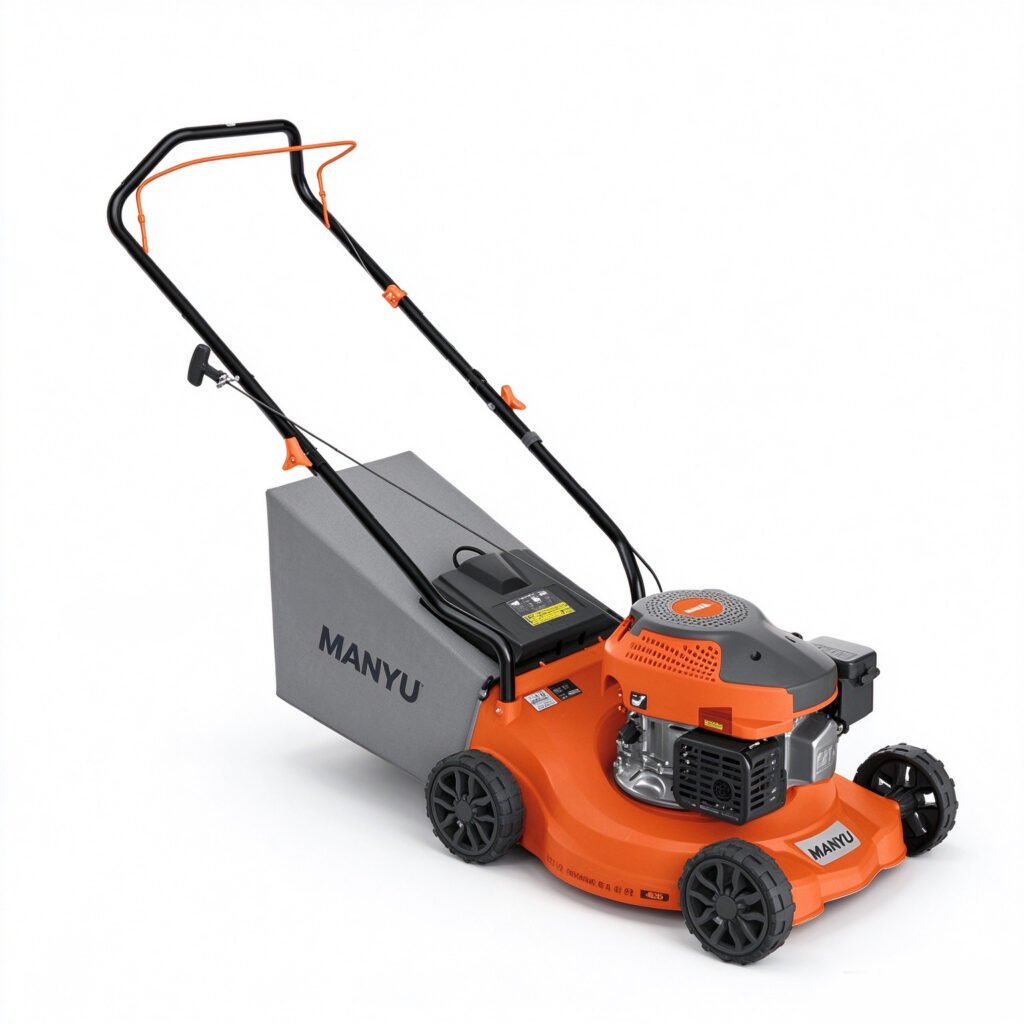
Start with your biggest customer segment and specify backwards. If you sell mostly to medium suburban plots, a 150 to 160 cc self-propelled 46 cm machine is your anchor model, and every other SKU exists to trade customers up or down from it. Browse the current petrol lawn mowers for export configurations, or send your specification sheet to the team via the contact page for a line-by-line quotation.