
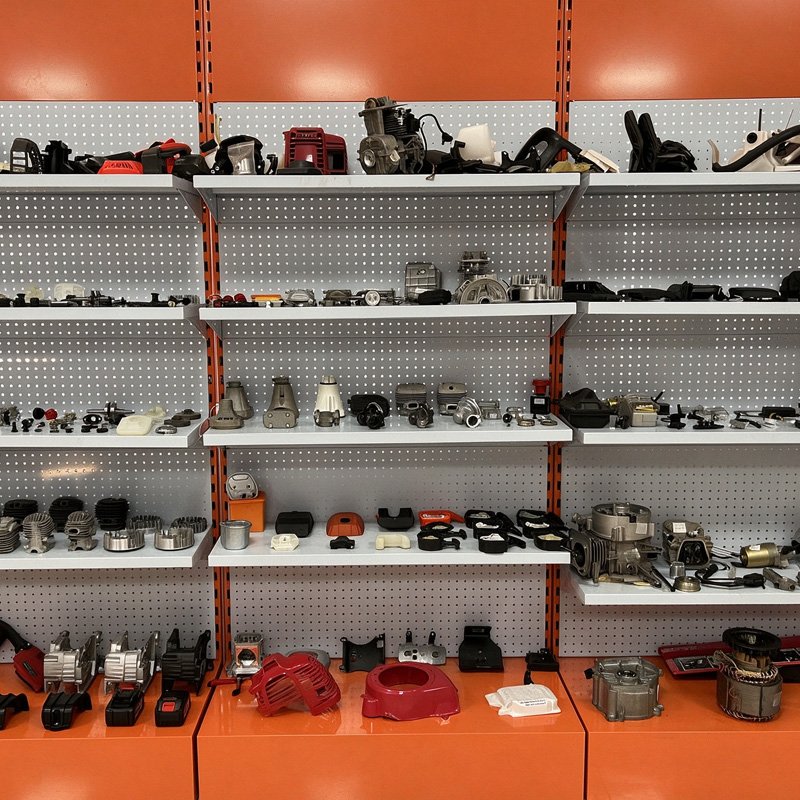
Most suppliers think a sale ends when the container is paid for. In garden machinery it ends when the first machine comes back for service. That moment decides whether the dealer places a second order — and it has very little to do with price.
The three questions a dealer asks after a failure
- Can I get the part, and how long does it take?
- Will the supplier accept the claim without a fight?
- Can I explain the failure to the customer in a way that keeps their trust?
Answer all three quickly and the dealer keeps selling. Fail on any one and the brand goes to the back of the catalogue.
Which parts actually fail
Across garden machinery, the failure pattern is remarkably consistent:
| Product | Most common failures |
|---|---|
| Chainsaws | Chains and bars, starter ropes, filters, spark plugs |
| Brush cutters | Gearboxes, clutches, nylon heads, shafts |
| Lawn mowers | Blades, drive belts, cables, wheels, deck corrosion |
| Leaf blowers | Impellers, bags, throttle cables, pull starters |
| Hedge trimmers | Blades, gearboxes, switches, cables |
Stocking just these parts covers most of the demand. A full parts catalogue is not necessary on day one; a focused one is.
How to structure the spares order
The practical approach is a ratio rather than a list: five to ten percent of unit volume in the first order, weighted towards the parts above. Ship them in the same container — the freight is almost free compared with air-freight later.
A dealer with a gearbox on the shelf will repair a machine in a week. A dealer waiting for a part from China will replace the machine and charge it back to you.
Technical response is part of the product
When a machine fails, the dealer usually needs an answer more than a part: is this covered, what caused it, how do I prevent it. A supplier who replies within a day with a clear answer turns a claim into a service call. A supplier who replies in a week turns it into a lost account.
That is why we answer quotations within 24 hours and keep wearing parts in stock — the two promises that matter most after the sale.
Frequently asked questions
How many spares should I hold?
Start with five to ten percent of unit volume, focused on the failure pattern for each product, then adjust after the first season.
Can spares ship with the machines?
Yes, and they should. The marginal freight is small and the arrival time is the same.
Do you supply parts for older models?
Wearing parts are held for the life of the model. For discontinued models, ask before ordering and we will confirm availability.
What this means for your range planning
Choose suppliers who can support what they sell. A slightly higher unit price with reliable spares almost always produces a better margin over two seasons than the cheapest quote with no after-sales.
If you are planning a range and want to see how spares support works in practice, get in touch — we can send a parts list with the quotation for any model in the catalogue.